
 Dispute Resolution


A shop or pharmacy in an apartment in Uzbekistan: converting residential to commercial
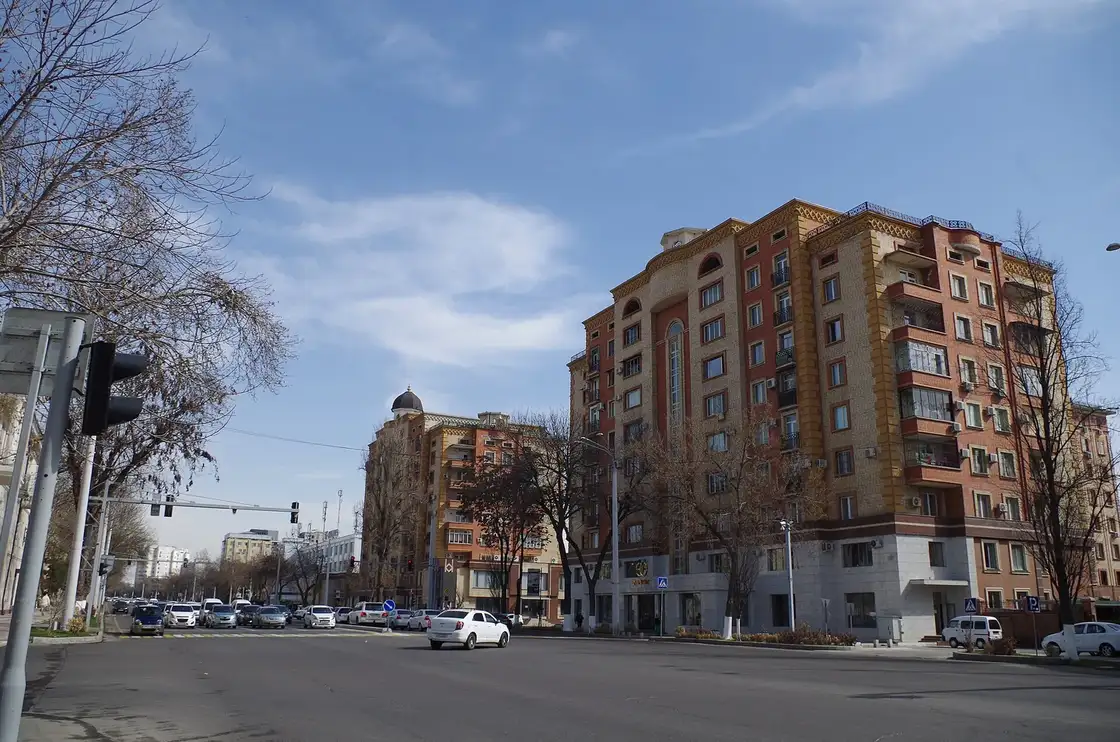
You cannot open a shop or a pharmacy in an apartment in a multi-apartment building without first converting it into non-residential premises: the Housing Code allows businesses in such apartments only after conversion. Conversion is possible if the apartment is on the ground floor, a separate entrance can be made and other conditions are met. The permit is issued by the district (city) construction department, and you can apply through my.gov.uz. Below are the requirements, the procedure, fees, fines and the special rules for pharmacies.
Can you trade from an apartment without conversion
Under Article 9 of the Housing Code, enterprises, institutions and organisations may be placed in a residential unit of a multi-apartment building only after it has been converted into non-residential premises in the established manner. Using apartments for industrial purposes is prohibited in all cases. A shop or a pharmacy that receives customers is exactly this kind of placement, so without conversion it is unlawful.
There is one exception, and it is not about retail: if home-based work is carried out in the apartment in the established manner, the apartment does not need to be converted (the same Article 9). The owner may also use the apartment for other purposes as long as the neighbours' rights are not violated (Article 23 of the Housing Code). But that does not let you open a retail outlet with a shop window and a flow of customers.
What you risk with an unconverted shop or pharmacy
- A fine for breaching the rules on using residential premises, which trading from an apartment may fall under: 5 to 10 BRV for individuals, i.e. 2.2 to 4.4 million soums, and 10 to 15 BRV for officials (Article 159 of the Code of Administrative Liability; 1 BRV = 440,000 soums from 1 September 2026).
- A pharmacy without a licence: a fine of 15 to 20 BRV for individuals and 20 to 25 BRV for officials (Article 165 of the Code). If the activity produced income on an especially large scale, criminal liability arises under Article 190 of the Criminal Code.
- Selling medicines outside pharmacies and their branches: a fine of 50 to 100 BRV with confiscation of the goods (Article 165¹ of the Code).
Beyond fines, an unlawful outlet brings practical problems: complaints from neighbours, inspections, the risk of closure and of losing what you spent on fitting it out.
What the apartment must meet
The conditions for conversion are set by the Administrative Regulation on permits for change of use, approved by Cabinet of Ministers Resolution No. 200 of 20 April 2022 (paragraph 10). An apartment qualifies if:
- it is on the ground floor (this does not apply to detached private houses);
- a separate entrance can be created;
- it is not in a dangerous condition and is not part of the special-purpose municipal housing stock;
- there is no ban on its transfer and no attachment on it (a mortgage is not an obstacle);
- conversion does not require changes affecting the building's structure contrary to planning rules and does not change the number or location of emergency exits;
- the planned activity is on the List of activities allowed in non-residential premises of apartment buildings;
- the intended use matches the permitted use of the land plot.
The List (Cabinet of Ministers Resolution No. 22 of 24 January 2000) includes retail of food and non-food goods, consumer services, entrepreneurs' offices, healthcare institutions and other activities. However, former apartments may not house, for example, shops selling chemicals, vegetables or fish, cafés and restaurants open after 11 pm, bathhouses or saunas.
Do you need the neighbours' consent
The Regulation only requires the notarised written consent of the apartment's co-owners, if there are any. Consent from all the neighbours in the building is not on the list of documents, and authorities may not ask for other documents. However, redevelopment must not violate the neighbours' rights relating to common property or threaten their life and health.
In practice, a separate entrance often affects common property: the outer wall or the land around the building. Under Article 13 of the Law "On Management of Multi-Apartment Houses", parts of the common property are given to individual owners for use in the manner set by a decision of the general meeting of owners. So it is wise to agree with the neighbours and the owners' association (or management company) in advance, even if this is not formally required for the permit.
How to obtain a conversion permit
- Check the apartment's documents. Ownership must be registered, and there must be no attachment or bans.
- Get the co-owners' consent certified by a notary, if the apartment is jointly owned.
- Apply at a Public Services Centre or online through the Single Portal my.gov.uz. The application form is filled in electronically.
- Pay the fee: 50% of BRV (220,000 soums). If you apply through the portal, the fee is 90% of that amount, i.e. 198,000 soums.
- Wait for the decision. Within seven working days, the district (city) construction department inspects the premises and issues a permit with a QR code or a reasoned refusal. For the ground floor of an apartment building, a positive opinion from the regional inspectorate supervising the operation of apartment housing is also required.
- If reconstruction is needed (a door instead of a window, a porch, new loads on utilities), after the permit you obtain an architectural and planning assignment, have a design prepared and approved, and then the premises are accepted into service.
- Update the cadastre. Before the premises are re-registered as non-residential, everyone permanently or temporarily registered there must be deregistered. The permit is valid for 2 years.
If you are refused, you can fix the issues and reapply within 10 working days without paying a new fee. A repeat review takes up to five working days.
Example. Suppose you own a ground-floor apartment on a busy street and want to open a mini-market. You get your spouse's notarised consent as co-owner, apply through my.gov.uz and pay 198,000 soums. The construction department inspects the premises, the inspectorate gives its opinion and you receive the permit. Then come the design for an entrance in place of a window, agreement with the building's owners, the works, acceptance and a new cadastral passport. Only after that can you open the shop.
What extra rules apply to a pharmacy
For a pharmacy, conversion is not enough: retail sale of medicines is a licensed activity. The licence is obtained through the Litsenziya information system (license.gov.uz) or my.gov.uz. Requirements for the premises, staff and equipment are set by the licensing rules and sanitary standards for pharmacies, so check them before buying or renting premises. Medicines may be sold only in pharmacies and their branches, so a "pharmacy point" in an ordinary apartment is unlawful.
What you can do at home without conversion
- Home-based work, for example sewing or crafts under a home-work contract. No conversion is needed.
- Self-employment for activities on the approved list, mostly services and crafts. The status is registered free of charge in the Soliq app or at the tax office. Check that your activity is on the list.
- Work without visitors, such as remote services or computer-based work, as long as it does not disturb the neighbours.
If customers or clients will come to you, or you put up a sign and a shop window, that is placing a business, and conversion is required.
When to call a lawyer
You can apply on your own. A lawyer is especially useful if:
- your conversion was refused and the reason seems unfounded, since a refusal can be appealed;
- the entrance requires using the building's common property and the neighbours or the association object;
- the apartment is jointly owned with relatives, mortgaged or subject to a dispute;
- you are planning a pharmacy or another licensed activity and want to check in advance whether the premises will qualify;
- a fine report has already been drawn up against you.
A lawyer specialising in real estate and construction can assess the premises, prepare the documents and plan the steps so that you do not have to rebuild the entrance or pay fines later.
In short
- A shop or pharmacy in an apartment building can be opened only after the apartment is converted into non-residential premises.
- Key conditions: ground floor, possibility of a separate entrance, no attachment or dangerous condition, and an activity allowed by the List.
- Apply at a Public Services Centre or via my.gov.uz; the fee is 50% of BRV (198,000 soums online); the decision takes 7 working days; the permit is valid for 2 years.
- Co-owners' notarised consent is required; use of the building's common property is decided by the general meeting of owners.
- Misusing an apartment can mean a fine of 5 to 10 BRV; selling medicines outside a pharmacy, 50 to 100 BRV.
- A pharmacy also needs a licence; home-based work and self-employment do not require conversion.
Photo: Artemev Nikolay, Wikimedia Commons (CC BY-SA 4.0)
Recognised your situation?
Every case has its own details. An advocate will review your documents, assess the risks and tell you what to do next.